
Buying a home is one of the biggest financial decisions most people will ever make. While it’s tempting to focus on the maximum amount a lender may approve, a better question is: How much house can you comfortably afford while still maintaining your financial goals and lifestyle?
For homebuyers in Tulsa, affordability depends on much more than the home's purchase price. Mortgage rates, property taxes, homeowners' insurance, down payment size, and the specific neighborhood all play important roles. Understanding these factors can help you set a realistic budget before you start shopping for a home.
Table of Contents
- What Determines How Much House You Can Afford?
- What Is the Average Home Price in Tulsa?
- Understanding the True Monthly Cost of Homeownership
- How Property Taxes Affect Affordability
- Factors That Influence a Home’s Price
- How Much Should You Spend on a House?
- How a Down Payment Changes Your Budget
- Benefits of Getting a Mortgage Through a Credit Union
- Steps to Determine Your Homebuying Budget
- Frequently Asked Questions
What Determines How Much House You Can Afford?
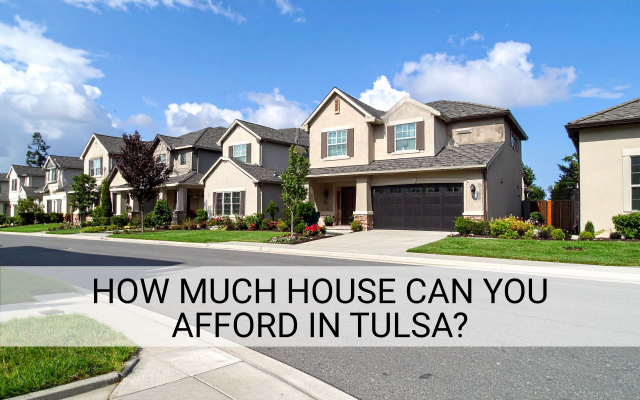 When lenders evaluate a mortgage application, they look at several factors, including income, debts, credit history, and available assets. However, your personal affordability may be different from what a lender approves.
Some of the biggest factors that affect affordability include:
- Monthly household income
- Existing debt obligations
- Mortgage interest rate
- Down payment amount
- Property taxes
- Homeowners insurance
- HOA fees, if applicable
- Maintenance and repair costs
Many financial experts recommend keeping total housing expenses at approximately 28% of gross monthly income, although individual circumstances vary. The goal is to leave room in your budget for savings, emergencies, retirement contributions, and everyday expenses.
What Is the Average Home Price in Tulsa?
One reason Tulsa continues to attract homebuyers is its relatively affordable housing market compared to many other metropolitan areas across the country.
Recent housing market data shows Tulsa home prices generally fall in the low-to-mid $200,000 range, with median sale prices typically ranging from approximately $225,000 to $245,000 depending on the source and reporting period.
Of course, prices vary significantly depending on the area. For example:
- Midtown Tulsa often features historic homes with unique character and higher price-per-square-foot values.
- South Tulsa neighborhoods may offer newer homes and larger lots.
- Jenks and Bixby can command higher prices due to strong demand and school districts.
- Broken Arrow provides a mix of affordability and newer developments.
- Owasso continues to attract buyers looking for suburban growth and newer housing stock.
Knowing the median home price provides a useful benchmark, but your actual budget should be based on your finances rather than market averages.
Understanding the True Monthly Cost of Homeownership
Many buyers focus exclusively on the mortgage payment, but the actual monthly cost of homeownership includes several expenses.
A typical monthly payment may include:
- Principal
- Interest
- Property taxes
- Homeowners insurance
- Mortgage insurance (if applicable)
- HOA dues (if applicable)
For example, a $250,000 home and a $350,000 home may have dramatically different monthly costs even if mortgage rates are identical.
Additionally, homeowners should budget for:
- Routine maintenance
- Lawn care
- HVAC repairs
- Roof repairs
- Appliance replacement
- Utility expenses
Owning a home offers long-term benefits, but it's important to prepare for costs beyond the mortgage itself.
How Property Taxes Affect Affordability
Property taxes are one of the most overlooked costs when calculating a homebuying budget.
In Tulsa County, effective property tax rates are generally close to 1% of a home's value, though actual taxes vary based on location, school district, exemptions, and other local factors. Tulsa County homeowners pay some of the higher property tax rates within Oklahoma.
Here's a simple illustration:
| Home Price | Estimated Annual Property Taxes (1%) | Estimated Monthly Cost |
|---|---|---|
| $200,000 | $2,000 | $167 |
| $250,000 | $2,500 | $208 |
| $300,000 | $3,000 | $250 |
| $400,000 | $4,000 | $333 |
While these figures are only estimates, they demonstrate how taxes can significantly impact monthly affordability.
Before purchasing a home, buyers can use the Tulsa County Tax Estimator to get a better idea of potential property tax obligations.
Factors That Influence a Home's Price
Not all homes with the same square footage cost the same amount. Several characteristics influence market value and affordability.
Location
Location remains one of the biggest drivers of home prices. Homes closer to major employers, shopping districts, entertainment areas, and transportation corridors often command higher prices.
School District
Even buyers without children often pay attention to school districts because they can affect resale value. Areas served by highly rated schools may have higher home prices due to increased demand.
Square Footage
Larger homes typically cost more, but price-per-square-foot can vary substantially between neighborhoods. A smaller home in a highly desirable area may cost more than a larger home elsewhere.
Age of the Home
Newer homes often require fewer immediate repairs and may offer greater energy efficiency. Older homes may have lower purchase prices but could require significant updates.
Condition and Repairs Needed
A home that needs a new roof, HVAC system, foundation work, or extensive remodeling may initially appear affordable but could require tens of thousands of dollars in additional investment.
Lot Size and Amenities
Features such as larger lots, pools, updated kitchens, garages, and outdoor living spaces often increase property values.
How Much Should You Spend on a House?
Rather than shopping based on the maximum loan amount available, many buyers benefit from establishing a comfortable monthly payment first.
Ask yourself:
- How much can I comfortably spend each month?
- Do I want room in my budget for travel and hobbies?
- Am I saving for retirement?
- Could I handle unexpected repairs?
- Would I still feel comfortable if insurance or taxes increased?
A home should support your financial goals, not limit them.
Many buyers discover that purchasing below their maximum approval amount provides more flexibility and reduces financial stress.
How a Down Payment Changes Your Budget
Your down payment directly affects affordability.
A larger down payment can:
- Reduce your loan balance
- Lower monthly payments
- Reduce total interest paid
- Potentially eliminate mortgage insurance
- Increase purchasing power
For example, a buyer purchasing a $300,000 home with 20% down will borrow substantially less than a buyer putting down 5%.
However, it's also important to maintain emergency savings after closing. Draining all available cash for a down payment can leave homeowners vulnerable to unexpected expenses.
Benefits of Getting a Mortgage Through a Credit Union
When comparing mortgage options, many buyers focus only on interest rates. However, the lender you choose can significantly impact your overall experience.
Credit unions offer several potential advantages:
Personalized Service
Credit unions often provide more individualized guidance throughout the mortgage process.
Competitive Rates and Fees
Because credit unions are member-owned, they may offer competitive mortgage products designed to benefit members rather than shareholders.
Local Market Knowledge
Local lenders understand the Tulsa housing market and can help borrowers navigate neighborhood-specific considerations.
Relationship-Based Banking
Many borrowers appreciate having their mortgage, checking account, savings account, and other financial services with the same institution.
For buyers looking to finance a home in Tulsa and surrounding communities, working with a local credit union can provide both convenience and personalized support.
Steps to Determine Your Homebuying Budget
Before beginning your home search, consider taking these steps:
- Review your monthly income and expenses.
- Estimate a comfortable monthly housing payment.
- Calculate potential property taxes and insurance costs.
- Determine your available down payment.
- Review your credit profile.
- Obtain a mortgage pre-qualification or pre-approval.
- Compare several loan options.
- Leave room in your budget for maintenance and unexpected expenses.
Following these steps can help ensure you purchase a home that fits comfortably within your long-term financial plan.
Frequently Asked Questions
How much income do I need to buy a house in Tulsa?
The income needed depends on the home's price, your down payment, interest rate, existing debts, and property taxes. Buyers should focus on maintaining a comfortable monthly payment rather than targeting a specific home price.
What is the average home price in Tulsa?
Recent market data places Tulsa's median home sale price in the low-to-mid $200,000 range, although prices vary significantly by neighborhood and market conditions.
Do property taxes affect how much house I can afford?
Yes. Property taxes are included in many monthly mortgage payments and can add hundreds of dollars per month depending on the home's value and location.
Is it better to put 20% down on a house?
A 20% down payment can reduce monthly payments and may eliminate mortgage insurance. However, the right down payment depends on your overall financial situation and available savings.
Should I get a mortgage from a bank or a credit union?
Many homebuyers choose credit unions because they often offer personalized service, local expertise, and competitive mortgage products. Comparing multiple lenders can help you find the best fit for your needs.
How do I know if I'm ready to buy a house?
You may be ready to buy when you have a stable income, sufficient savings for a down payment and closing costs, and a budget that comfortably supports homeownership expenses.
Can Oklahoma Central Credit Union help me finance the house I want?
When determining what kind of home you can afford, consider Oklahoma Central Credit Union. OCCU offers mortgage loan options for homebuyers throughout Tulsa and surrounding communities. Our team can help you explore loan programs, understand your monthly payment options, and determine what fits your budget. With a simple application process and personalized guidance from local mortgage professionals, we make it easier to move from house hunting to homeownership.
Find a Mortgage That Fits Your Budget
Determining how much house you can afford starts with understanding the complete picture, not just the purchase price. By considering mortgage payments, property taxes, insurance, maintenance costs, and your long-term financial goals, you can confidently establish a realistic homebuying budget.
At Oklahoma Central Credit Union, our mortgage team helps homebuyers throughout Tulsa and surrounding communities explore financing options that fit their needs. Whether you're purchasing your first home, moving to a larger property, or refinancing an existing mortgage, we're here to help.
Ready to take the next step? Apply for an OCCU mortgage loan today and visit our mortgage rates page to explore current loan options and start planning for your next home.