
The holiday season means busy shopping centers, crowded parking lots, more packages arriving at the door and, unfortunately, more opportunities for criminals and scammers to take advantage of distracted consumers.
Some holiday scams happen online through fraudulent texts, emails and websites. Others happen closer to home, including package theft and a crime known as bank jugging, where criminals target people after they visit a bank, credit union or ATM.
Knowing what to watch for can help you protect your money and personal information throughout the holidays. From recognizing suspicious messages to staying aware when withdrawing cash, a few simple precautions can make a big difference.
Table of Contents
- What Is Bank Jugging?
- How Does Bank Jugging Happen?
- How to Stay Safe at a Bank, Credit Union or ATM
- Common Holiday Scams to Watch For
- How to Protect Yourself From Gift Card Scams
- How to Spot Fake Holiday Text Messages
- How to Prevent Porch and Package Theft
- What to Do If You Think You Have Been Scammed
- Frequently Asked Questions
- Stay Alert This Holiday Season
What Is Bank Jugging?
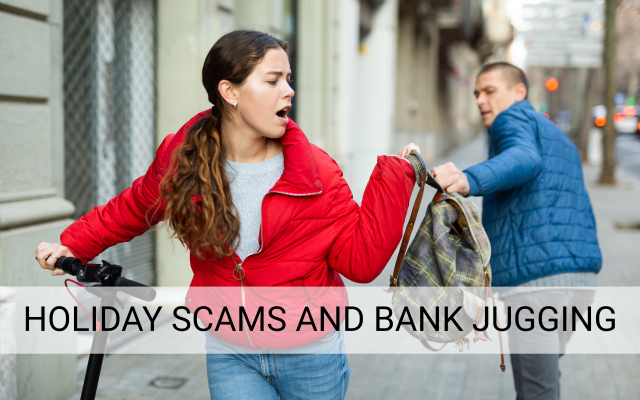 If you have recently heard the term and wondered, "what is bank jugging?", it refers to a type of crime in which someone watches a bank, credit union or ATM for a person who appears to have withdrawn cash. The criminal may then rob the person nearby or follow them to another location.
Bank jugging can involve criminals targeting customers they believe have large amounts of cash or valuable purchases. A person may be approached in a financial institution parking lot, or the criminal may follow them and wait for another opportunity to steal the money.
For example, someone could withdraw cash from an ATM, get into their vehicle and drive to a store. If a criminal follows them and sees them leave an envelope or bag in the vehicle, the criminal may break into the vehicle while they are inside.
While this type of jugging crime can happen at any time of year, the holiday season is a good time to be especially aware of your surroundings. People may be carrying extra cash, shopping bags or expensive purchases while moving between several busy locations.
How Does Bank Jugging Happen?
A jugging crime often starts with observation. A criminal may spend time near a financial institution or ATM watching customers enter and leave.
They may pay particular attention to someone who appears to be carrying:
- A bank envelope
- A large amount of cash
- A deposit bag
- A purse, backpack or other bag that may contain cash
- Recently purchased high-value items
The criminal may then follow that person to another destination and wait until they are distracted or away from their vehicle.
One important thing to remember about bank jugging is that you may not immediately realize you are being targeted. The person committing the crime may simply appear to be another customer or another vehicle in the parking lot.
That makes awareness one of your best defenses.
How to Stay Safe at a Bank, Credit Union or ATM
Whether you are visiting an Oklahoma Central Credit Union branch or using an ATM while running holiday errands around Tulsa, Broken Arrow, Jenks, Owasso or elsewhere, develop a habit of paying attention to what is happening around you.
Pay Attention Before and After Your Transaction
Before approaching an ATM, take a quick look around the area. If someone is lingering nearby or something does not feel right, consider using another ATM or returning at another time.
Continue paying attention when you leave. If you think someone is following you, do not drive directly home. Go to a safe, populated location and contact law enforcement if necessary.
Put Cash Away Before Leaving
Avoid counting or displaying cash in a parking lot. Put your money securely away before leaving the branch or ATM.
If possible, avoid carrying large amounts of cash in the first place. Digital payments, debit cards and other payment methods may reduce the need to make large cash withdrawals.
Never Leave Cash in Your Vehicle
If you make a withdrawal, keep the money with you until you can secure it. Do not leave a bank envelope, purse, backpack or cash inside an unattended vehicle, even if you are only making a quick stop.
Choose ATMs Carefully
Whenever possible, choose an ATM in a well-lit, visible area. Before inserting your card, inspect the ATM for anything that looks loose, damaged or unusual. The FBI also recommends covering the keypad with your other hand when entering your PIN to help protect against hidden cameras that may be used with card-skimming devices.
Common Holiday Scams to Watch For
Physical theft is not the only risk that can increase around the holidays. Criminals also take advantage of the season through online and phone-based holiday scams.
Scammers know consumers are expecting order confirmations, shipping updates, holiday promotions and messages from friends and family. That makes fraudulent communication easier to disguise.
Here are a few common scams to keep on your radar.
Gift Card Scams
Gift cards are popular holiday presents, which also makes them attractive to scammers.
One version starts with an unexpected email, phone call or text from someone pretending to be a boss, friend, family member or other trusted person. They claim they urgently need you to purchase gift cards and send them the card numbers or PINs.
The Federal Trade Commission warns that a request to buy gift cards and provide the numbers or PINs is a major scam warning sign. Once a scammer has those numbers, they may be able to access the money without ever possessing the physical card.
Scammers can also tamper with physical gift cards before they are purchased. They may record the card number and PIN, then wait until a shopper activates and loads money onto the card before stealing the balance.
How to Protect Yourself From Gift Card Scams
If you are buying gift cards for the holidays, inspect the packaging and card carefully for signs of tampering. Keep your receipt after purchasing the card in case you need to report a problem.
Most importantly, remember that gift cards should be treated like gifts, not a form of payment to someone demanding money.
If someone unexpectedly asks you to purchase gift cards to pay a bill, solve an emergency, claim a prize or complete an urgent task, stop before sending anything.
Contact the person, company or organization directly using contact information you already know is legitimate.
How to Spot Fake Holiday Text Messages
Your phone may be another place where holiday scams show up.
During the holiday shopping season, consumers are used to receiving texts about purchases and deliveries. Scammers can take advantage of that by sending fake messages claiming:
- Your package could not be delivered.
- Your shipping address needs to be updated.
- You owe a small redelivery fee.
- A suspicious purchase was made on your account.
- Your bank account has been locked.
- You need to verify personal or payment information.
These messages often include a link designed to take you to a fake website.
The FTC recommends that consumers avoid clicking links or responding to unexpected texts. Instead, independently contact the company or financial institution using a website, app or phone number you know is legitimate.
Package delivery scams are particularly important to watch for during the holidays. The U.S. Postal Inspection Service warns that criminals use fraudulent emails and texts that appear to come from USPS to collect personal information or direct recipients to malicious websites.
If you are expecting a package and receive a questionable text, open the retailer or shipping carrier's official app or website yourself and check your order there.
How to Prevent Porch and Package Theft
Online shopping can mean a steady stream of boxes arriving at your front door during November and December. Unfortunately, packages sitting outside can also attract thieves.
The U.S. Postal Inspection Service recommends avoiding leaving packages unattended for extended periods. Consumers can use package tracking, request signature confirmation when available, arrange for packages to be held or use secure delivery lockers.
Consider these precautions when ordering holiday gifts:
- Track deliveries so you know when packages are expected.
- Bring packages inside as soon as possible.
- Ask a trusted neighbor to collect packages if you will be away.
- Use a secure package locker or pickup location when available.
- Request a signature for valuable purchases.
- Make sure doorbell or security cameras have a clear view of your delivery area.
Also be cautious of packages you did not order. The FTC warns that unexpected packages can sometimes be part of a "brushing" scam. Some may even contain QR codes directing recipients to fraudulent websites designed to collect personal or financial information.
Avoid scanning unfamiliar QR codes or providing personal information simply to find out who supposedly sent an unexpected package.
What to Do If You Think You Have Been Scammed
Even careful consumers can encounter convincing scams. If you believe your financial information has been compromised, acting quickly is important.
If your Oklahoma Central account or card information may be involved, contact us as soon as possible using a trusted phone number or through our official website. Do not use a phone number or link provided in a suspicious text, email or voicemail.
You should also:
- Review your accounts for unfamiliar transactions.
- Lock or replace a compromised debit or credit card when appropriate.
- Change passwords for affected online accounts.
- Enable multifactor authentication when available.
- Save suspicious texts, emails, receipts or other documentation.
- Report fraudulent communications through the appropriate channels.
Fraud can also be reported to the Federal Trade Commission through ReportFraud.ftc.gov.
If you believe you are being followed after leaving a branch or ATM, prioritize your physical safety. Do not confront the person or drive home. Go to a safe, populated location and contact local law enforcement.
Frequently Asked Questions
What is bank jugging?
Bank jugging is a crime in which someone watches customers leaving a bank, credit union or ATM and targets a person they believe is carrying cash. The criminal may attempt a robbery nearby or follow the customer to another location before stealing the money.
How can I protect myself from bank jugging?
Stay aware of your surroundings before and after visiting a financial institution or ATM, put cash away before leaving, avoid displaying or counting money in public and never leave withdrawn cash unattended in your vehicle. If you think someone is following you, go to a safe location and contact law enforcement.
What are common holiday scams?
Common holiday scams include fake package delivery texts, fraudulent shopping websites, gift card scams, fake fraud alerts and phishing messages designed to collect financial or personal information. Package and mail theft can also become a concern when holiday deliveries increase.
How can I tell if a text from my bank is fake?
Be cautious of unexpected messages that pressure you to click a link, provide sensitive information, transfer money or act immediately. Instead of interacting with the message, contact your financial institution directly through its official website, mobile app or a trusted phone number.
What should I do if someone asks me to pay with gift cards?
Treat unexpected requests for gift card payments as a major warning sign. Do not provide the gift card number or PIN. If the request supposedly comes from someone you know, contact that person independently using a phone number or other method you trust.
What should I do if I think someone followed me from an ATM?
Do not confront the person or drive directly home. Drive to a safe, populated location or law enforcement facility and call 911 if you believe you are in immediate danger. Make note of the vehicle or other identifying details only if you can do so safely.
Stay Alert This Holiday Season
The holidays should be about spending time with the people you care about, not worrying about fraud. Understanding what is bank jugging, recognizing the warning signs of jugging crime and knowing how to identify common holiday scams can help you make safer decisions throughout the season.
Whether you are shopping online, picking up gifts around Tulsa or stopping by an ATM before heading to your next holiday activity, stay aware of your surroundings and think twice before responding to unexpected requests for money or personal information.
At Oklahoma Central Credit Union, helping our members protect their financial well-being is an important part of what we do. If something involving your Oklahoma Central account does not look right, contact us promptly so our team can help.