Managing credit card debt can feel overwhelming, especially when you're juggling multiple balances, interest rates, and monthly payment due dates. If you're looking for a way to simplify your finances, you may be considering a signature loan or credit card debt consolidation. But what's the difference, and which option makes the most sense for your financial situation?
Signature loans, also known as unsecured personal loans, can be a useful tool for consolidating debt, covering unexpected expenses, or financing major purchases. For Oklahomans looking to take control of their finances, understanding how signature loans work and how they compare to other credit card consolidation strategies can help you make an informed decision.
 In this guide, we'll explain signature loans, explore different ways to consolidate credit card debt, and discuss how Oklahoma Central Credit Union can help you find a borrowing solution that fits your needs.
Table of Contents
- What Is a Signature Loan?
- How Do Signature Loans Work?
- What Is Credit Card Debt Consolidation?
- Signature Loans vs. Credit Card Consolidation: What's the Difference?
- Benefits of Using a Signature Loan to Consolidate Debt
- When Is a Signature Loan the Better Choice?
- Other Ways to Consolidate Credit Card Debt
- How to Qualify for Signature Loans
- Frequently Asked Questions
- Explore Personal Loan Options at Oklahoma Central Credit Union
What Is a Signature Loan?
A signature loan is a type of unsecured personal loan that allows you to borrow money without putting up collateral, such as your home or vehicle. Instead, lenders evaluate factors like your credit history, income, existing debt, and ability to repay the loan.
The name "signature loan" comes from the fact that your agreement to repay the borrowed money, rather than a pledged asset, serves as the basis of the loan. To learn more, read "What Is a Signature Loan? A Tulsa Borrower's Guide."
How Do Signature Loans Work?
Signature loans generally provide borrowers with a lump sum of money that is repaid through scheduled monthly payments over a predetermined period.
Most signature loans have fixed interest rates, meaning your rate and required monthly payment remain consistent throughout the loan term.
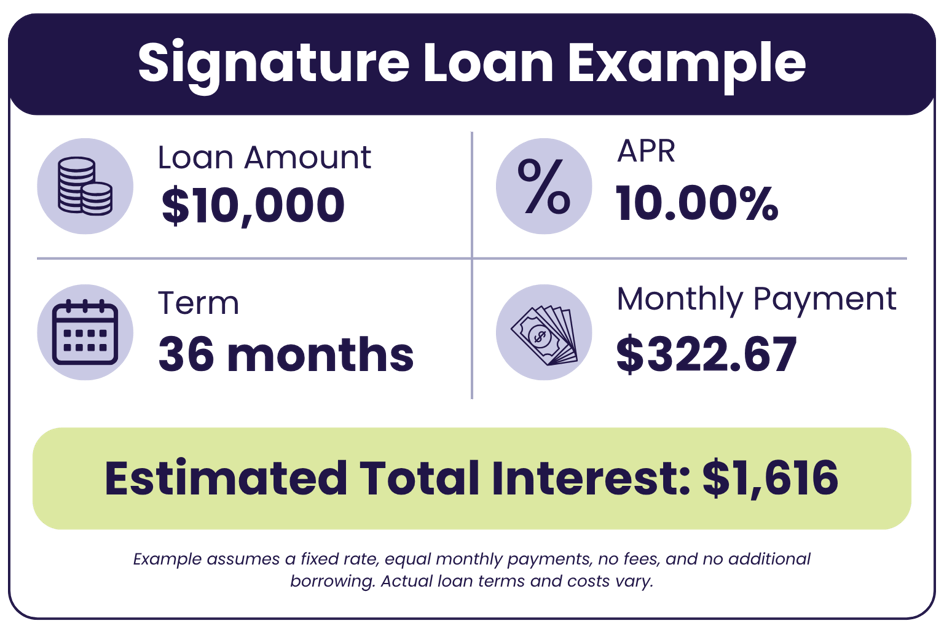
For example, suppose you take out a $10,000 signature loan with a 10% annual percentage rate (APR) and a 36-month repayment term.
What Is Credit Card Debt Consolidation?
Credit card debt consolidation is the process of combining multiple credit card balances into one new loan or credit account.
Instead of making separate payments to several credit card companies, you make one payment toward your consolidated debt.
For example, imagine you have the following credit card balances:
|
Credit card |
Balance |
APR |
|---|---|---|
|
Card A |
$3,000 |
24% |
|
Card B |
$4,000 |
21% |
|
Card C |
$3,000 |
26% |
|
Total |
$10,000 |
By consolidating these balances, you may be able to replace multiple high-interest debts with one payment at a lower interest rate.
However, consolidation doesn't automatically eliminate debt or guarantee savings. The benefit depends on the new interest rate, repayment term, fees, and your ability to avoid accumulating additional balances.
Common consolidation methods include unsecured personal loans, balance transfer credit cards, and certain home equity loans.
For many borrowers, a signature loan provides a straightforward way to consolidate credit card debt without using their home or vehicle as collateral.
Signature Loans vs. Credit Card Consolidation: What's the Difference?
One important distinction is that signature loans and credit card consolidation aren't necessarily competing products.
A signature loan is a type of financing, while debt consolidation is a financial strategy. In fact, using a signature loan to pay off multiple credit cards is one of the most common forms of debt consolidation.
The real comparison is often between using an unsecured personal loan and using a balance transfer credit card to consolidate existing balances.
|
Feature |
Signature loan |
Balance transfer credit card |
|---|---|---|
|
Loan structure |
Installment loan |
Revolving credit |
|
Interest rate |
Usually fixed |
Often promotional, then variable |
|
Monthly payments |
Typically fixed |
Can vary |
|
Repayment timeline |
Set loan term |
Depends on payments |
|
Collateral |
Not required |
Not required |
|
Potential fees |
Loan fees may apply |
Balance transfer fees may apply |
|
Best suited for |
Structured repayment |
Short-term payoff strategies |
Both options can simplify debt repayment, but the right choice depends on your financial goals, credit qualifications, and repayment timeline.
Benefits of Using a Signature Loan to Consolidate Debt
Using an unsecured personal loan to consolidate credit card debt can offer several advantages.
One predictable monthly payment
Instead of keeping track of multiple credit card payments, you'll have one scheduled payment each month. This can make budgeting easier and reduce the chance of missing a due date.
Potential interest savings
If your signature loan has a lower APR than your existing credit cards, you may pay less interest over the repayment period.
However, it's important to compare the total cost of borrowing, not just the monthly payment. A longer repayment term may reduce your monthly payment while increasing the total interest paid.
A defined payoff date
Unlike credit cards, which allow you to carry a revolving balance, a traditional signature loan has a specific repayment term.
This can help you establish a clear timeline for becoming debt-free.
No collateral required
With an unsecured signature loan, you don't have to pledge your home, vehicle, or savings as collateral.
This can make signature loans an attractive option for borrowers who want to consolidate debt without securing the loan against a valuable asset.
When Is a Signature Loan the Better Choice?
A signature loan may be worth considering when you have several high-interest credit card balances and want a structured repayment plan.
It may be especially helpful if:
- You're paying high interest rates on multiple credit cards.
- You qualify for a personal loan with a lower APR.
- You prefer consistent monthly payments.
- You want a defined timeline for paying off your debt.
- You don't want to use your home or savings as collateral.
However, a signature loan may not be the best choice if your existing credit cards already have low interest rates or if the new loan includes fees that outweigh potential savings.
Before applying, calculate how much you currently owe, compare your existing interest rates, and determine what monthly payment fits comfortably within your budget.
Remember that consolidating credit card debt doesn't reduce the amount you owe. It simply changes how that debt is organized and repaid.
Other Ways to Consolidate Credit Card Debt
Although signature loans are a popular option, they're not the only way to manage multiple credit card balances.
Balance transfer credit cards
Some credit cards offer introductory 0% APR periods on transferred balances. This can be beneficial if you can repay the balance before the promotional period expires.
However, balance transfer fees and higher interest rates after the introductory period can increase costs.
Secured personal loans
A secured personal loan uses an eligible asset, such as savings or a certificate account, as collateral.
These loans may offer competitive rates, but they also introduce the risk of losing pledged collateral if you fail to repay.
Home equity loans
Homeowners may consider using a home equity loan to consolidate debt. While these loans may offer lower interest rates, they use your home as collateral.
That means missed payments could potentially put your home at risk.
Credit counseling and repayment plans
If you're struggling to manage existing payments, a nonprofit credit counseling organization may help you develop a repayment strategy.
Some organizations offer debt management plans that combine eligible payments without requiring you to take out a new loan.
You can learn more about these alternatives through the Consumer Financial Protection Bureau's guide to debt relief options.
How to Qualify for a Signature Loan
If you're considering a signature loan, understanding what lenders look for can help you prepare before applying.
Because signature loans don't require collateral, lenders generally evaluate your ability to repay based on several financial factors.
-
Credit history: Your credit score and payment history help lenders determine your eligibility and potential interest rate.
-
Income: Lenders typically review your income to determine whether you can comfortably afford the monthly payments.
-
Debt-to-income ratio: This measures how much of your monthly income goes toward existing debt obligations.
-
Loan amount and term: The amount you request and your preferred repayment timeline can also influence your approval and available rates.
Before applying, gather information about your existing credit card balances, monthly payments, income, and other financial obligations.
For borrowers in Tulsa and surrounding Oklahoma communities, working with a local credit union can provide access to personal guidance throughout the lending process.
Frequently Asked Questions
Is a signature loan the same as a debt consolidation loan?
Not exactly. A signature loan is an unsecured personal loan, while debt consolidation describes the process of combining multiple debts into one payment. A signature loan can be used for debt consolidation, but it can also finance other personal expenses.
Can I use a signature loan to pay off credit cards?
Yes. Many lenders allow borrowers to use signature loans to pay off multiple credit card balances. This can simplify repayment and potentially reduce interest costs if the new loan offers more favorable terms.
Are signature loans better than credit cards?
It depends on how you plan to use the money. Signature loans may be better for larger expenses or debt consolidation because they generally provide fixed payments and a defined repayment period. Credit cards may be more convenient for smaller purchases that you can pay off in full each month.
What credit score do I need for a signature loan?
There isn't one universal minimum credit score for signature loans. Requirements vary by lender, and approval typically depends on your credit history, income, existing debt, and other financial factors. Borrowers with stronger credit profiles may qualify for more favorable rates.
Will consolidating credit card debt hurt my credit score?
Applying for a new loan may temporarily affect your credit score because of a hard credit inquiry and the addition of a new account. However, paying down credit card balances and consistently making on-time loan payments may benefit your credit profile over time. Individual results vary.
Can I consolidate credit card debt without collateral?
Yes. An unsecured signature loan or an eligible balance transfer credit card can allow you to consolidate debt without pledging collateral. Approval and terms depend on your financial qualifications.
How much can I borrow with a signature loan?
Borrowing limits vary by financial institution and individual qualifications. Oklahoma Central Credit Union currently offers unsecured personal loans of up to $35,000, with repayment terms of up to 60 months. Actual loan amounts and terms are subject to approval.
Is it better to consolidate credit card debt or pay it off separately?
Consolidation may be beneficial if it lowers your total borrowing costs or makes your payments easier to manage. However, if your current interest rates are low or you can pay off your balances quickly, continuing with your existing repayment strategy may be more affordable. Learn more in Does It Make Sense to Consolidate Your Credit?
Explore Personal Loan Options at Oklahoma Central Credit Union
Whether you're consolidating credit card debt, covering an unexpected expense, or planning a major purchase, finding the right financing option can make a difference.
At Oklahoma Central Credit Union, we offer both secured and unsecured personal loans designed to help members manage their financial needs.
Our unsecured signature loans offer competitive rates, flexible repayment terms, and no collateral requirement. We also offer share-secured loans backed by eligible savings or certificate accounts for borrowers who prefer a secured option.
If you're researching signature loans or looking for ways to simplify credit card debt, our local team can help you explore your options and find a solution that works for your budget.
Ready to take the next step? Explore Oklahoma Central's personal loan options and check our current loan rates to see how we can help you move forward with confidence.